

Trust Her
About
Trust Her is a reproductive-health initiative of the Child Poverty Action Lab (CPAL) focused on removing barriers to birth control access in Dallas County.
Target Audience
Women and girls in Dallas County, with a particular focus on uninsured and lower-income individuals who face financial or systemic barriers to accessing contraception. Trust Her also provides educational resources for teens and parents to promote informed, accessible reproductive healthcare.
The Summer Studio Team
Kate Canales, Gray Garmon (Founders), Jon Freach (Civic designer), Kelcey Gray (Graphic designer), Jeniffer Fory (Graphic designer), David Rezaei (UX designer)
Trust Her Team
Kate McCollom (Senior Director, Maternal Health), Liz Tyler (Director, Trust Her), Alejandra Pulido (Clinic Quality Improvement Manager), Courtni Jones (Education and Outreach Manager)

The Summer Studio 2026
Two by Two, in collaboration with CPAL’s Trust Her team, developed an Expansion Playbook designed to support Trust Her as the program expanded into new cities. The project was structured in phases, with Phase 1 focused on strategy and development by the Two by Two and Trust Her teams.
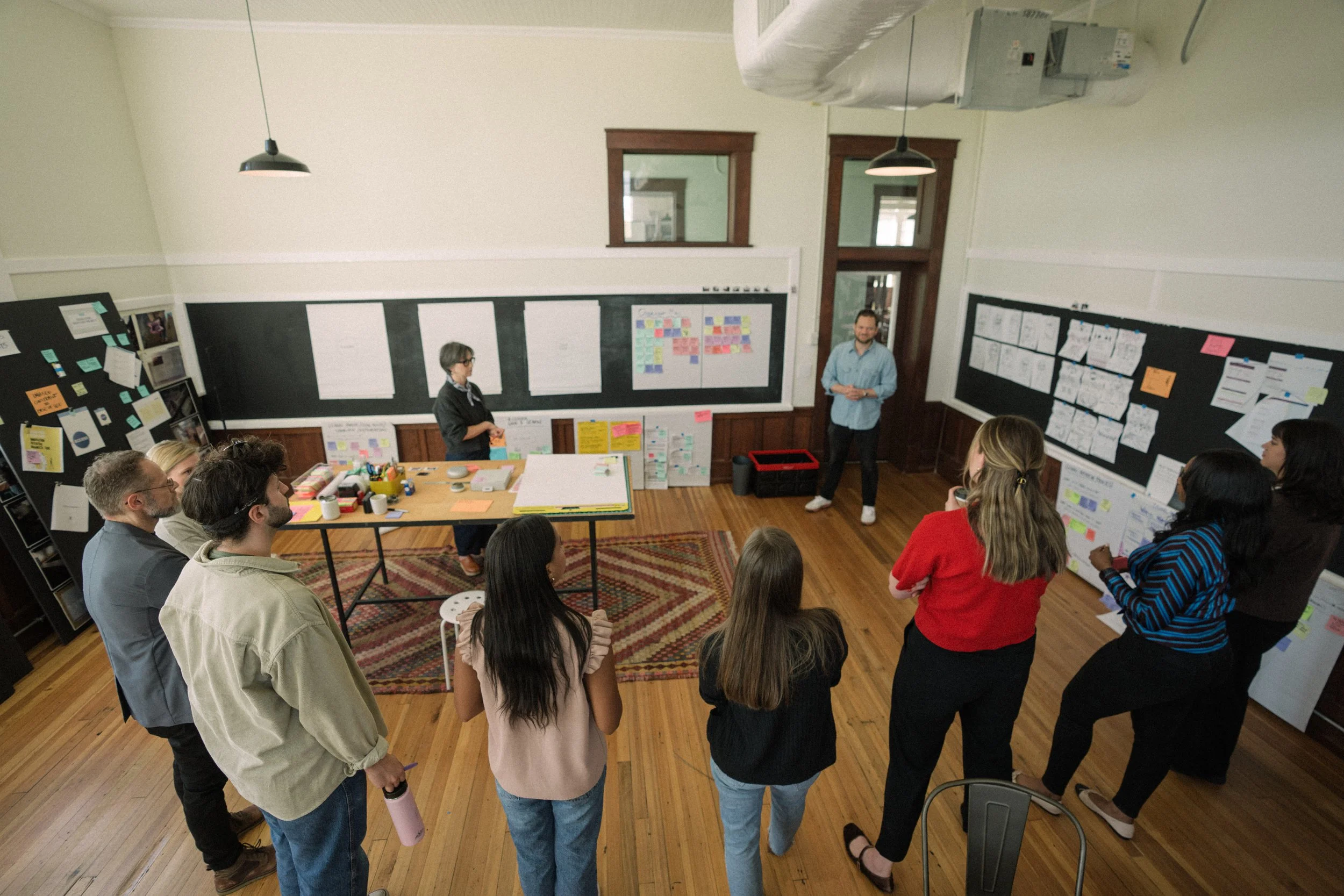
I joined the project during Phase 2 as part of The Summer Studio, a three-week collaborative design program focused on turning the established strategy into tangible, test-ready assets. This phase focused on translating the playbook’s strategic direction into practical, adaptable assets that could support Trust Her’s launch and outreach in new communities.
One Page Reciprocal Agreement
Clinic Profile
Site visit + Staff Experience guide
Contraceptive Access Assessment
Stock model diagram
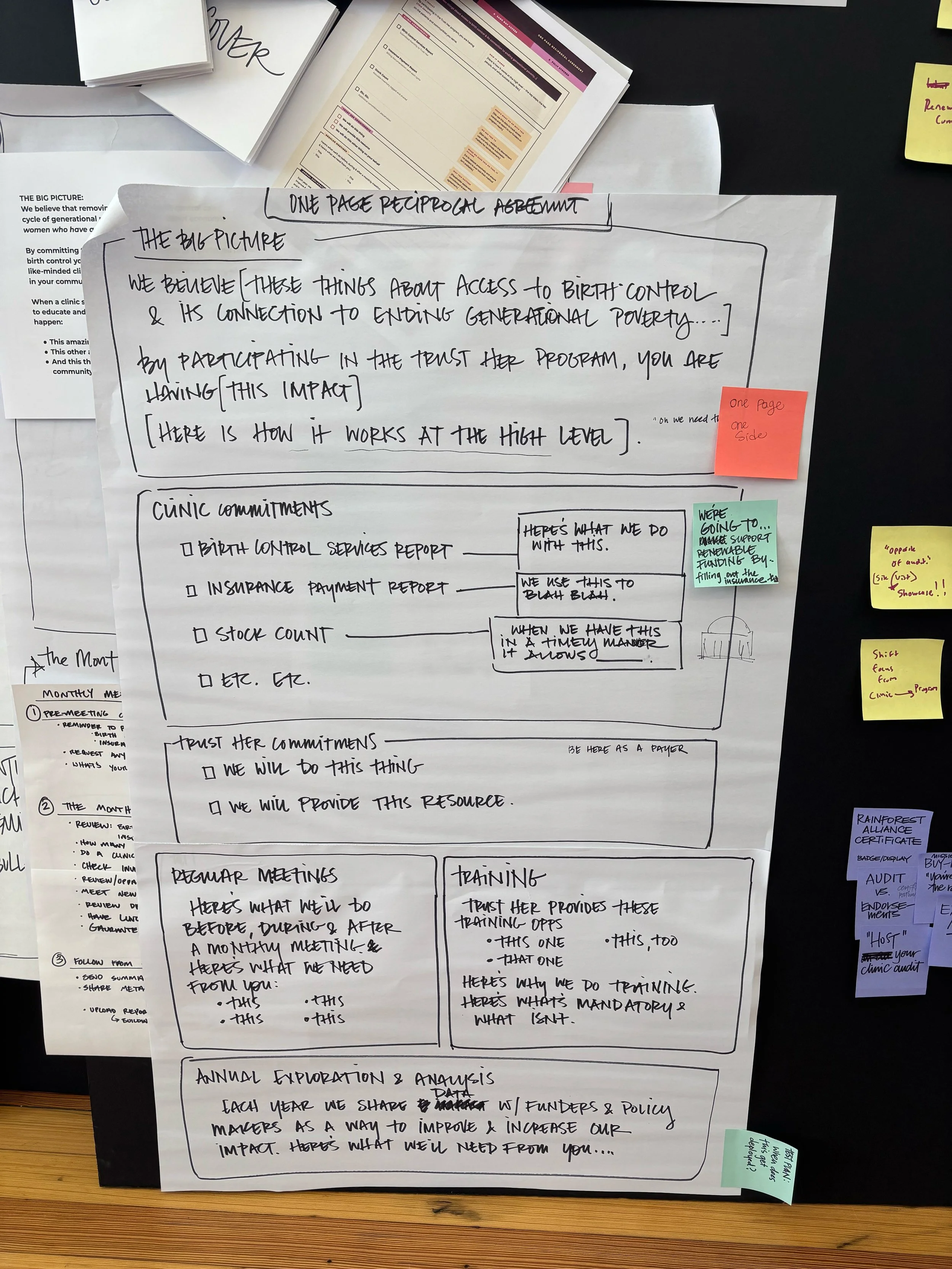
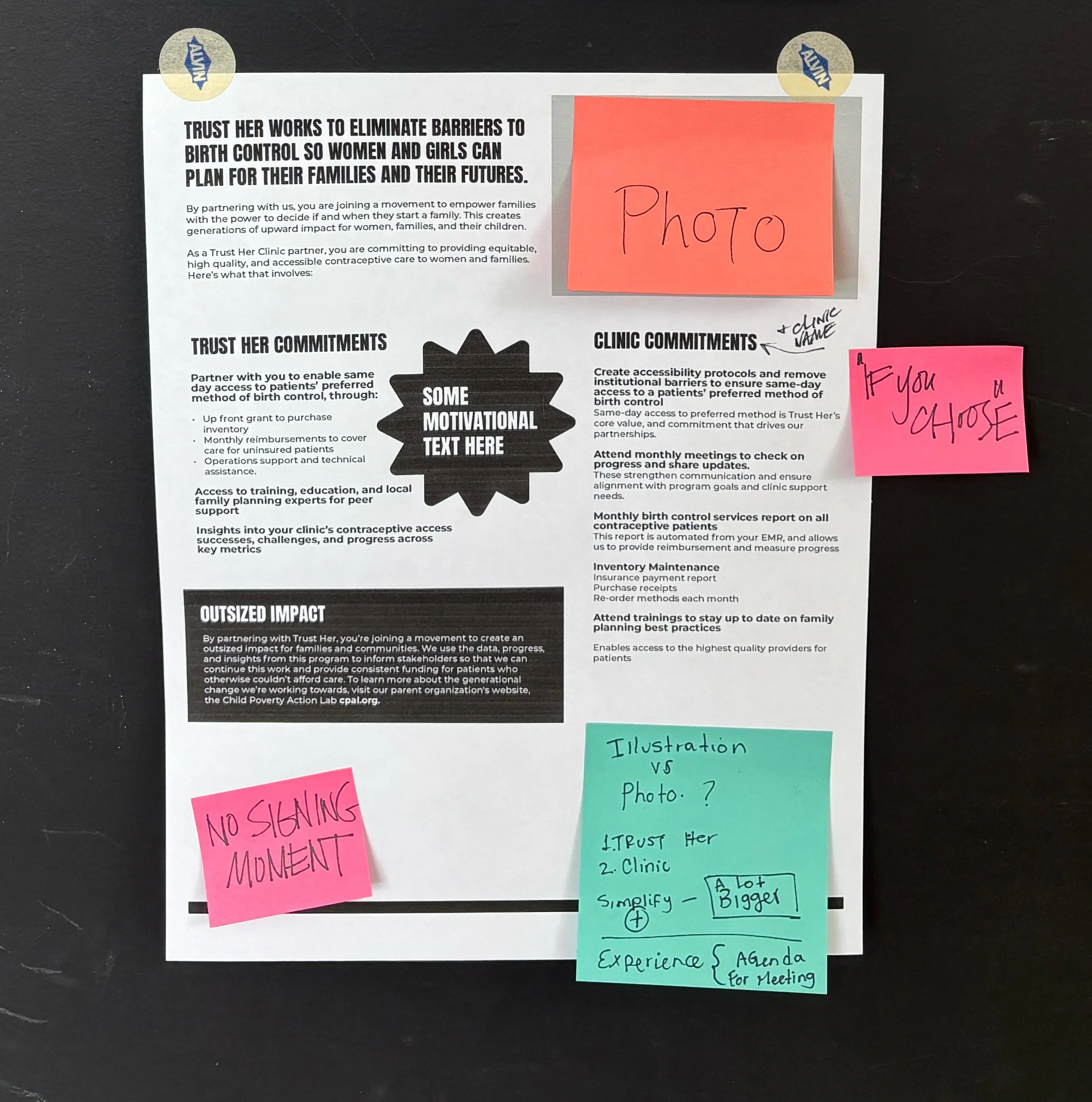
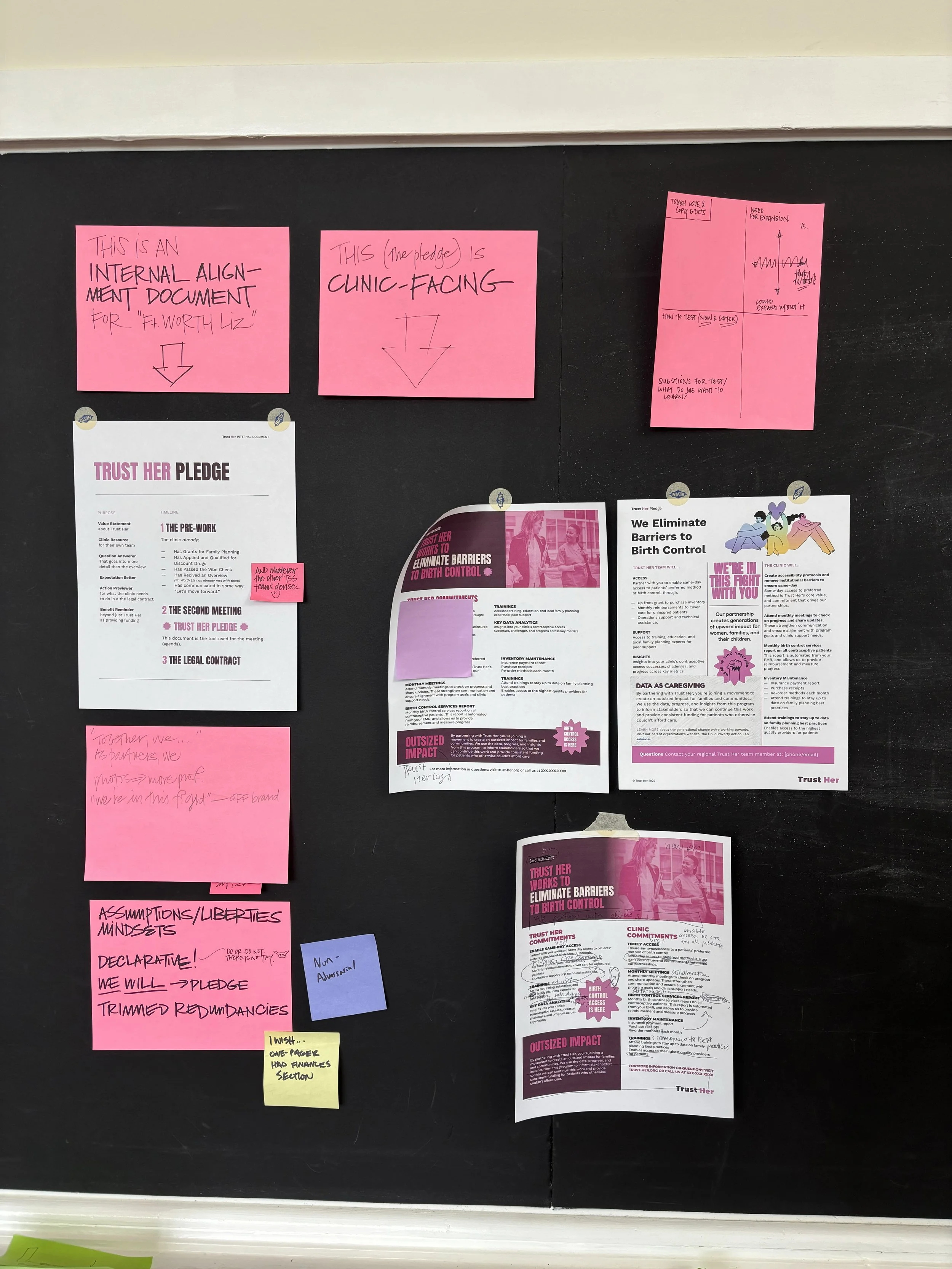
Iterations of the One Page Reciprocal Agreement
Although the entire team participated in the collaborative sticky-note exercise for each asset, we then divided into smaller groups to focus on the development and design of specific deliverables. I was part of the team responsible for the one-page Reciprocal Agreement, working alongside Kelcey Gray. Together, we translated the insights and requirements identified during the exercise into a clear visual structure and refined design, balancing content hierarchy, usability, and visual appeal to create an effective, high-quality piece.
Purpose
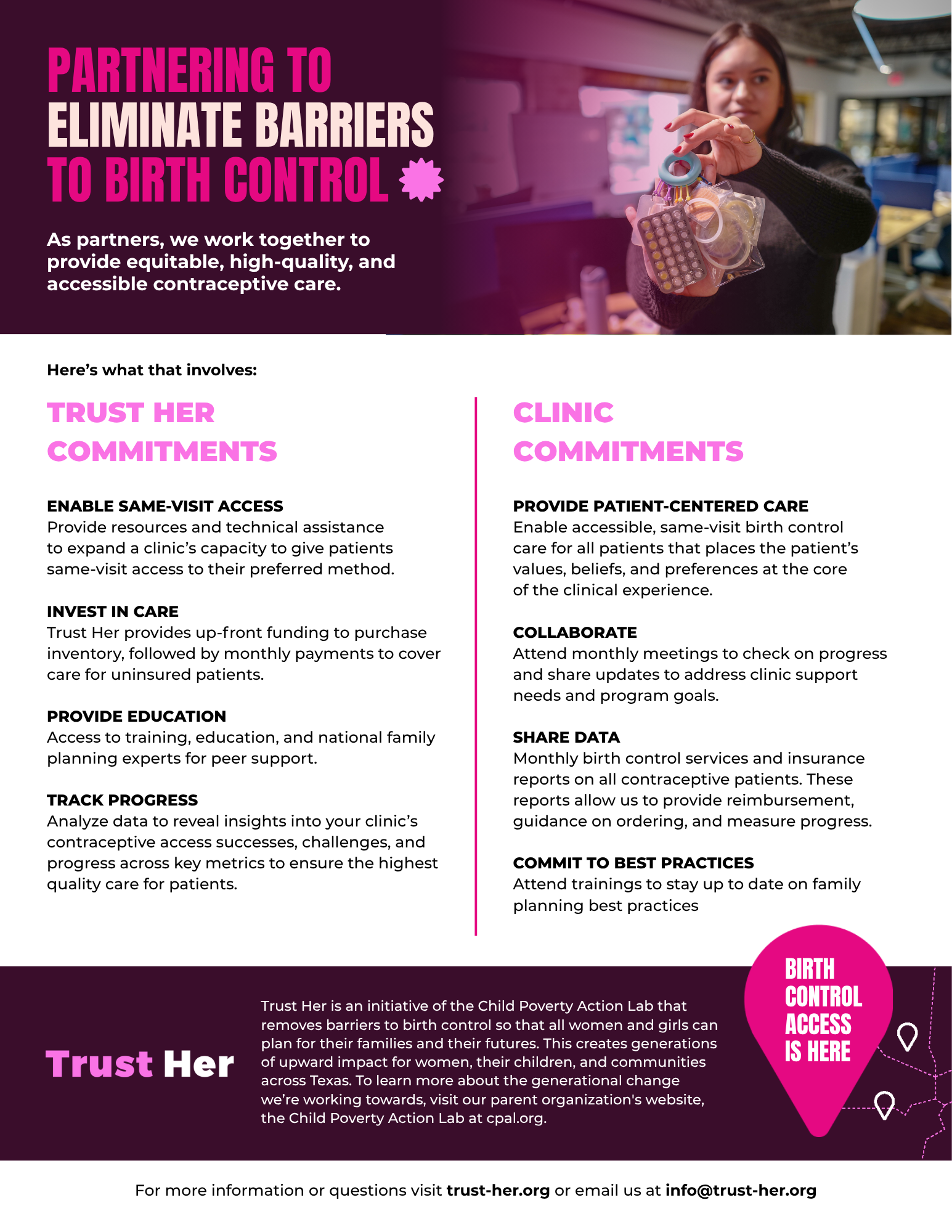
There is a critical moment in the partnership conversations where a new clinic partner needs to understand expectations and responsibilities. That has typically been in the form on a legal contract, but the One Page Reciprocal Agreement provides a high level introduction to these key elements and provides room for conversation.
Final design
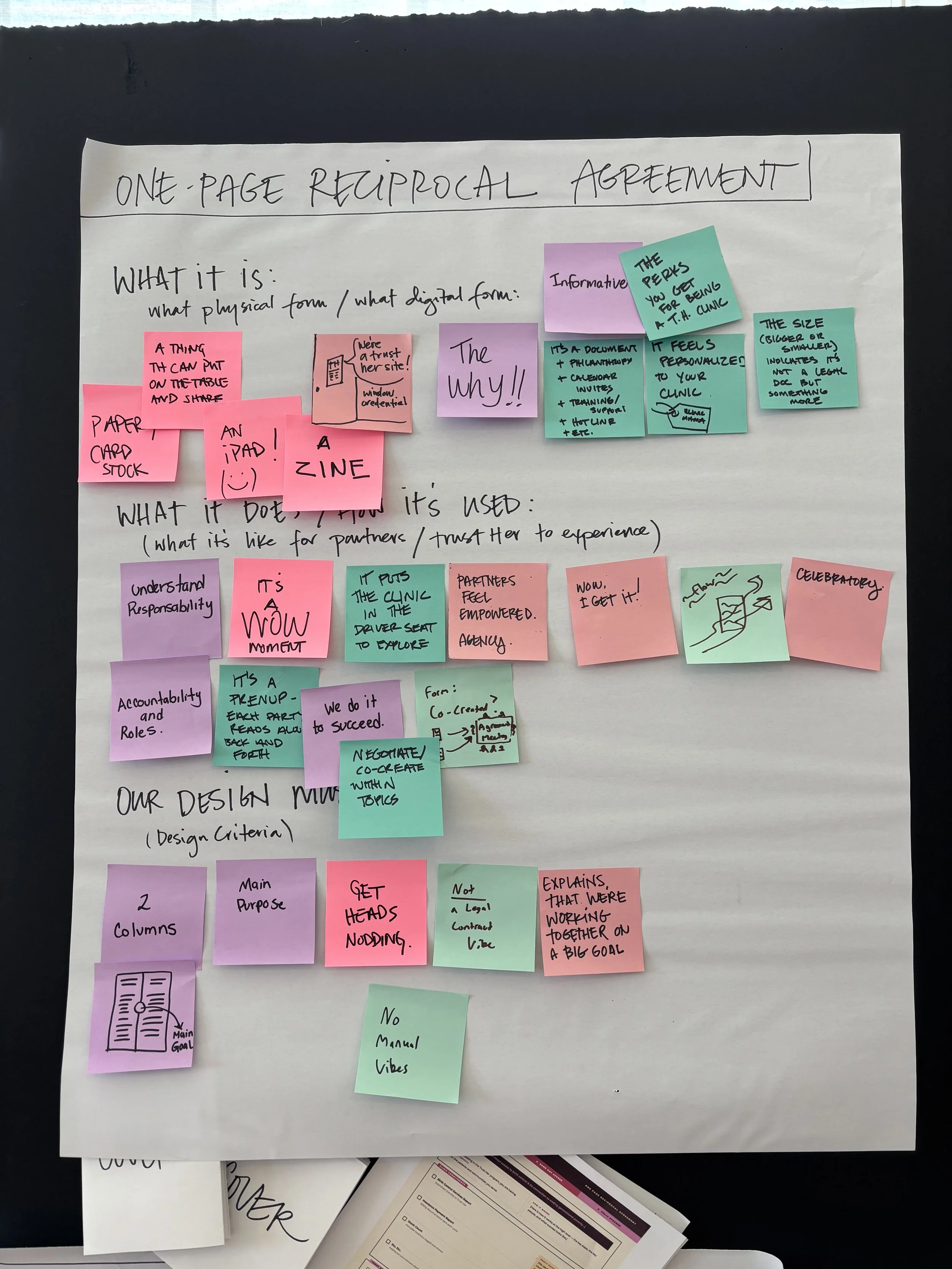
To establish the content and structure of the one-page Reciprocal Agreement, both teams used a collaborative sticky-note exercise to identify and organize the most important ideas. The notes were grouped into three key areas:
“What Is It,” “What Does It Do / How Is It Used,” and “Our Design Must-Haves.”
This process helped us distinguish essential information from supporting details, define the agreement’s purpose and functionality, and establish the visual and content requirements needed for the final piece. By aligning both teams around these priorities, we were able to create a polished, high-quality deliverable that was not only visually refined but also clear, practical, and useful in real-world applications.